Healthy trees are vital to our gardens, streets, and local environment — but even the strongest trees can fall victim to disease or pest infestations. Across Glasgow and the west of Scotland, changing weather patterns, pollution, and imported species have all increased the risks to our trees. Knowing what to look for, and acting early, can make all the difference between saving a tree and losing it.
At GlasGrow Tree Surgeons, we’ve treated and removed hundreds of diseased trees across the region. Here’s our guide to the most common UK tree diseases and pests, how to spot them, and what you can do to protect your trees.
1. Ash Dieback (Hymenoscyphus fraxineus)
One of the most destructive tree diseases in Europe, Ash Dieback affects ash trees across the UK.
Symptoms:
- Dark lesions where branches meet the trunk
- Wilting leaves that turn black in summer
- Crown dieback (top of the tree thinning out)
Treatment:
Unfortunately, there’s currently no cure. Early detection is key — infected trees may need to be removed to prevent the spread.
GlasGrow’s qualified arborists carry out risk assessments and controlled removals, ensuring all infected material is disposed of safely in accordance with Scottish environmental guidance.
2. Dutch Elm Disease
Dutch Elm Disease has devastated the UK’s elm population for decades, caused by a fungus spread by elm bark beetles.
Symptoms:
- Leaves turning yellow, curling, and falling prematurely
- Brown streaks under the bark
- Branch dieback starting from the crown downward
Treatment:
Infected elms should be removed and burned, as the disease spreads rapidly through root systems. If you suspect an infection, contact a professional tree surgeon immediately.
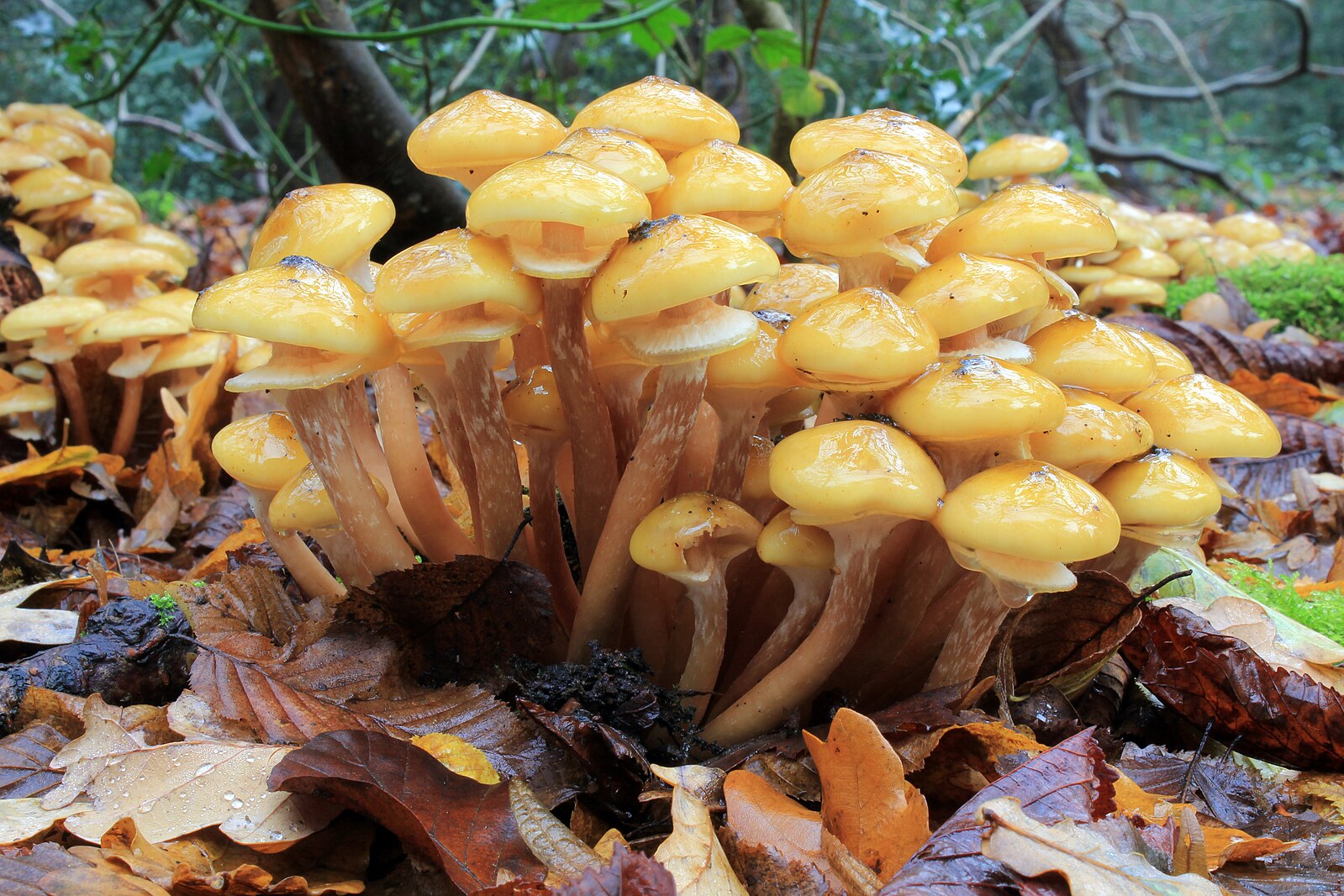
3. Honey Fungus (Armillaria)
Honey Fungus is a common cause of tree death in gardens across Glasgow. It attacks roots, slowly killing the host tree while spreading underground to others.
Symptoms:
- Golden mushrooms at the base of the trunk in autumn
- Cracked or bleeding bark
- White fungal sheets beneath the bark
- Sweet, mushroom-like smell from decaying wood
Treatment:
Once a tree is infected, removal is often the only option. It’s essential to remove roots and infected soil to stop the fungus spreading. GlasGrow Tree Surgeons can excavate and safely dispose of infected material, helping protect surrounding trees.
4. Oak Processionary Moth (OPM)
The Oak Processionary Moth is an invasive pest that affects oak trees, now spreading northward in the UK. Its caterpillars can strip trees of leaves — and even cause allergic reactions in humans and pets.
Symptoms:
- Bare patches or defoliation on oak trees
- White silk nests on trunks or branches
- Lines (“processions”) of moving caterpillars
Treatment:
OPM infestations require specialist removal due to health risks. Our trained operatives follow strict safety protocols for identification, containment, and disposal.
5. Phytophthora Root Rot
This disease affects a wide range of tree species — especially beech, oak, and conifers. It thrives in waterlogged soil, making it common in poorly drained areas around Glasgow.
Symptoms:
- Yellowing or thinning leaves
- Reduced growth
- Dark, oozing patches on the trunk
- Root decay and instability
Treatment:
Improving drainage can help reduce risk, but infected trees often require removal. GlasGrow’s arborists can test soil, inspect roots, and advise on replacement planting with more resistant species.
6. Bleeding Canker of Horse Chestnut
Common in horse chestnut trees, this bacterial disease can cause severe damage if ignored.
Symptoms:
- Rust-coloured or dark patches on bark
- Oozing sap or “bleeding” from trunk
- Premature leaf drop and canopy thinning
Treatment:
There’s no guaranteed cure, but early pruning and removal of infected material can prolong the tree’s life. Regular inspections help spot early signs before structural damage occurs.
7. Aphids, Scale Insects & Leaf Miners
While smaller than fungal or bacterial diseases, these pests weaken trees by feeding on sap and leaves.
Common signs include:
- Sticky residue (honeydew) on leaves or patios
- Curling or discoloured foliage
- Tiny holes or mines in leaves
Treatment:
In mild cases, pruning infested branches can help. Severe infestations may need horticultural oil or systemic treatments, which should always be applied by a professional.
Preventing Tree Diseases and Pests
The best defence against disease is prevention. Regular tree inspections by a qualified arborist can identify early warning signs before damage becomes irreversible.
At GlasGrow Tree Surgeons, we recommend:
- Annual tree health checks (especially before winter)
- Regular pruning to improve airflow and reduce stress
- Avoiding waterlogging and compacted soil
- Removing deadwood and debris that harbour pests
- Replanting with native, disease-resistant species
We also provide detailed Tree Risk Assessments (TRA) for homeowners, schools, and commercial clients — ideal for insurance compliance and long-term safety.
Why Choose GlasGrow Tree Surgeons?
Fully qualified and insured arborists (Lantra & City & Guilds certified)
Specialists in disease diagnosis and safe removal
Environmentally responsible – 100% of green waste recycled
Local Glasgow experts familiar with native species and regional conditions
Free, no-obligation quotes and honest advice
Protect Your Trees — Get a Health Check Today
If you’ve spotted unusual growth, leaf loss, or fungal activity, don’t wait until it’s too late.
Contact GlasGrow Tree Surgeons for a professional tree health inspection anywhere in Glasgow and the surrounding areas.
Call or message us today, or visit www.glasgrowtreesurgeons.com to book your free quote.
We’ll help you identify, treat, and prevent tree diseases — keeping Glasgow’s greenery strong and healthy for years to come.